
Birding the Hotel Grounds – San Miguel Reservoir – Fredo Fresha Hummingbird Gardens (Poasito) – Bougainvillea Hotel Gardens
WEATHER; clear blue sky to start, very windy. Later as we gained height we had cloud and rain. Top temp 26C
Six of us were collected from our accommodation in La Garita and driven to the Aeropuerto Hotel to meet the other five for breakfast. Afterwards, we had some time to find a few birds in the garden before the bus arrived with our guide, the windy conditions did not help.
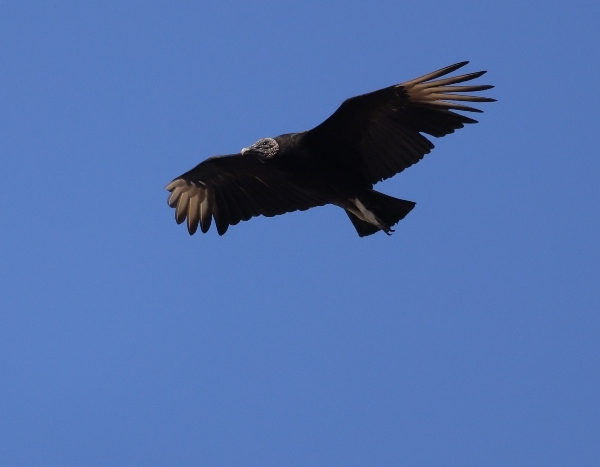
Black Vulture taken by Kevin Jones - a very common bird always in the sky
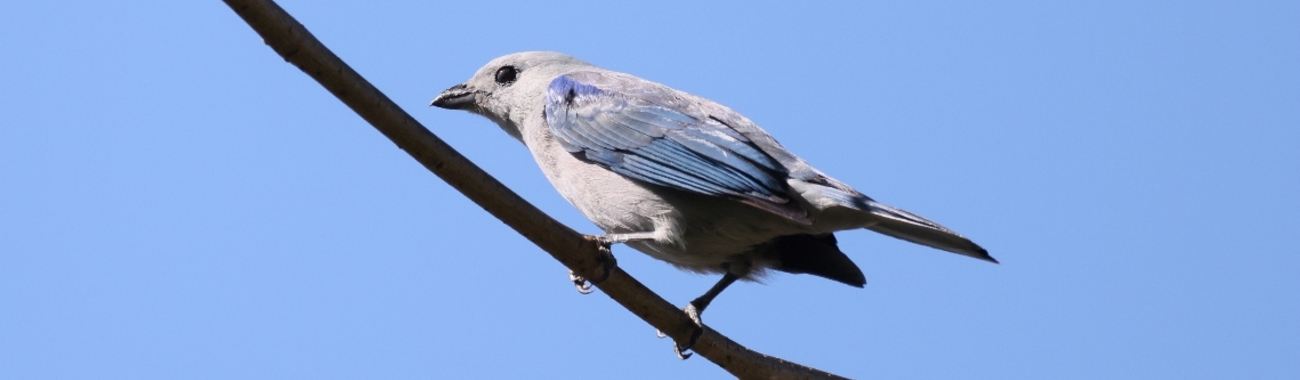
It was very windy which kept most species down, but we did find a few. The very common cLay-colored Thrush, Rufous-backed Wren (changed from Rufous-naped Wren), Baltimore Oriole, Yellow Warbler, Tennessee Warbler, Great Kiskadee, Blue-and-Gray Tanager, Hoffman’s Woodpeckers, Plain-capped Starthroat, Rufous-tailed Hummingbird, Turkey and Black Vultures, Blue-and-white Swallows and a few butterflies.
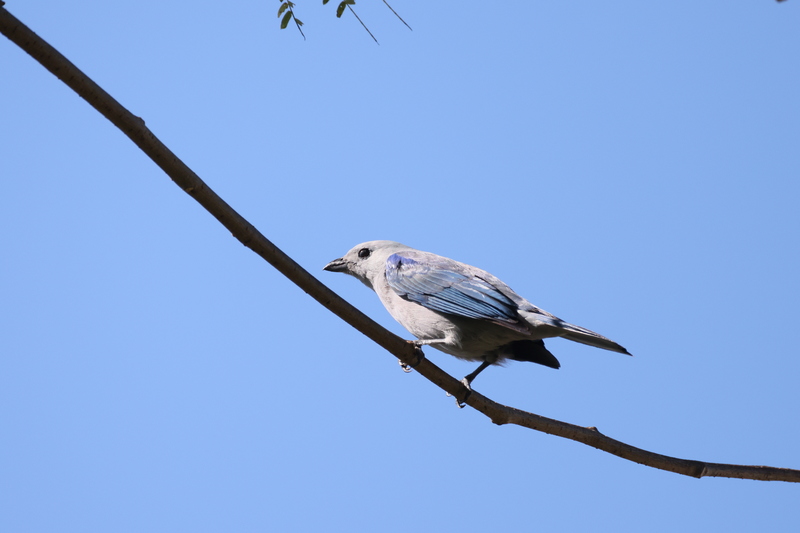
Blue-gray Tanager taken by Kevin Jones
At 9am our bus arrived with Jason, our guide, onboard, we were all raring to go, the luggage was loaded, and off we went. Our first destination was the large San Miguel Reservoir (no, it wasn’t full of lager!) the sat nav said 20 minutes but it took over an hour because of the horrendous traffic around San Jose.
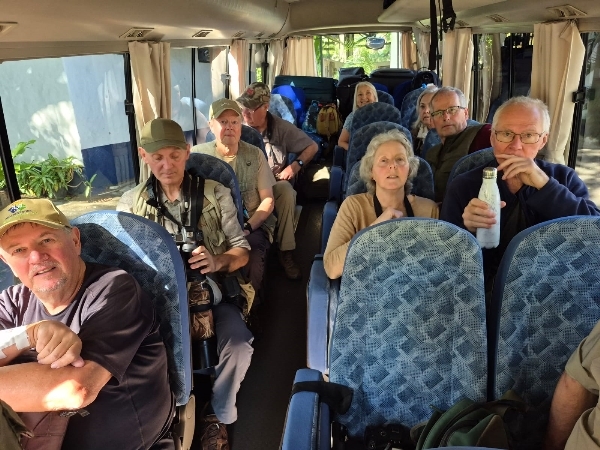
on the bus for our first destination
It was quite hot when we arrived but the windy conditions helped to keep us cool. Scanning the water we found several species in a relatively quick time. Blue-winged Teal, Lesser Scaup, Least Grebe, genuine Muscovy Ducks, Southern Lapwing, Spotted Sandpiper, Snowy Egret, Little Blue Heron, Great Egret, Northern Jacana and a couple of the group saw a Purple Gallinule.
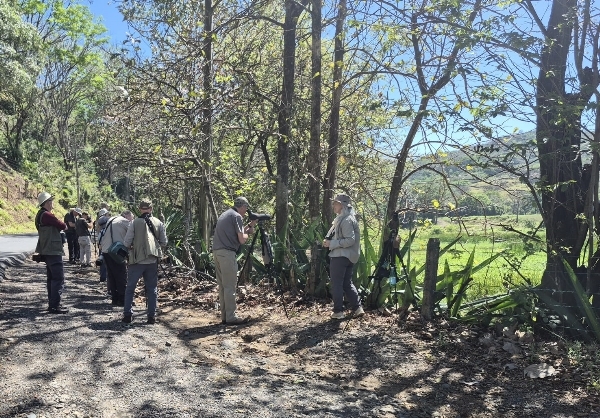
at the roadside next to the San Miguel Reservoir
Jason then concentrated on the many birds dashing about in the mature trees above and on a bank across the busy and noisy road. He called out many species, I can’t list them all but a few stand out in my memory: Streak-headed Woodcreeper, Nutting’s Flycatcher, Social Flycatcher, Boat-billed Flycatcher, Masked Tityra, Blue-black Grassquit, Stripe-headed Sparrow, Turquoise-browed Motmot. Most of these species were expected to be found in this dry-forest environment.
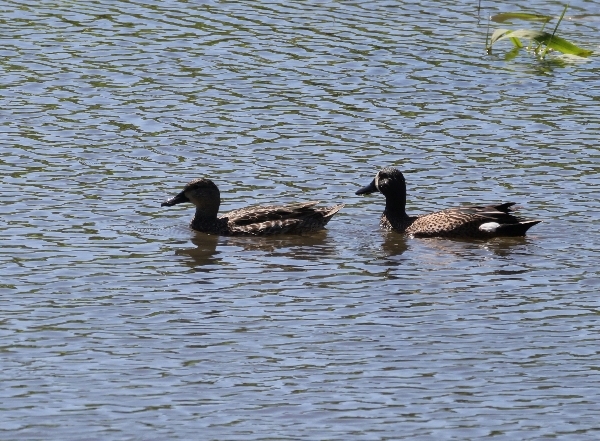
Blue-winged Teal - another Kevin Jones picture
It was approaching lunchtime when we pulled away from there, we drove upwards toward the Poas Mountain area and headed to a well known Hummingbird Garden in Poasito, Unfortunately for us we drove into low cloud and drizzling rain, so we headed into a restaurant for lunch.
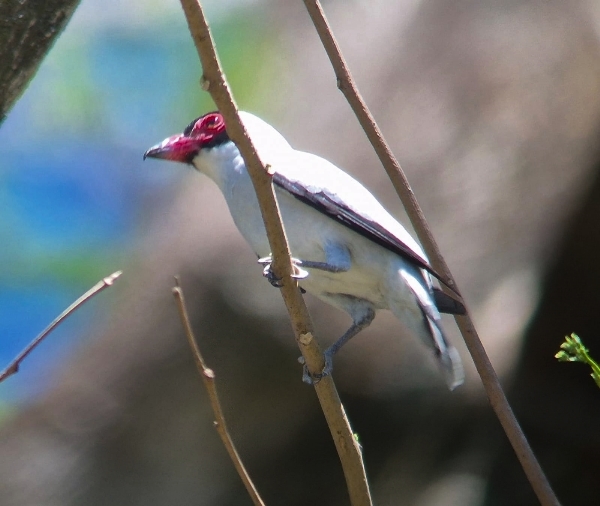
female Masked Tityra
The rain never stopped during our visit, it only varied in intensity, but most of us had a waterproof coat to hand. We never saw many species at all, it was quite bleak there and such a shame. All the hummingbird feeders had been removed, so we watched certain flowering plants. We ended seeing four species of hummers. The Magenta-throated Woodstar was by far the gem of hummers, we did see Lesser Violetear, Talamanca and Rufous-tailed Hummingbirds.
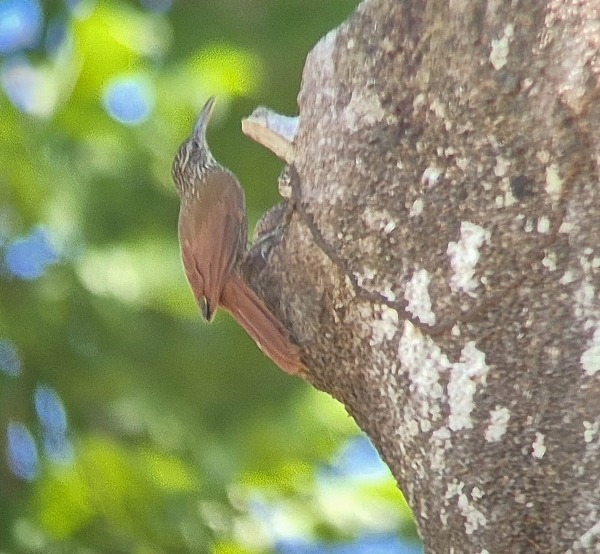
Streak-headed Woodcreeper
The rain drove us off after a woodland walk down into steep ravine. We saw very little down there too! Jason heard a Grey-breasted Wood-Wren and we all heard the call of the Lesser Violetear, but mostly we saw nothing.
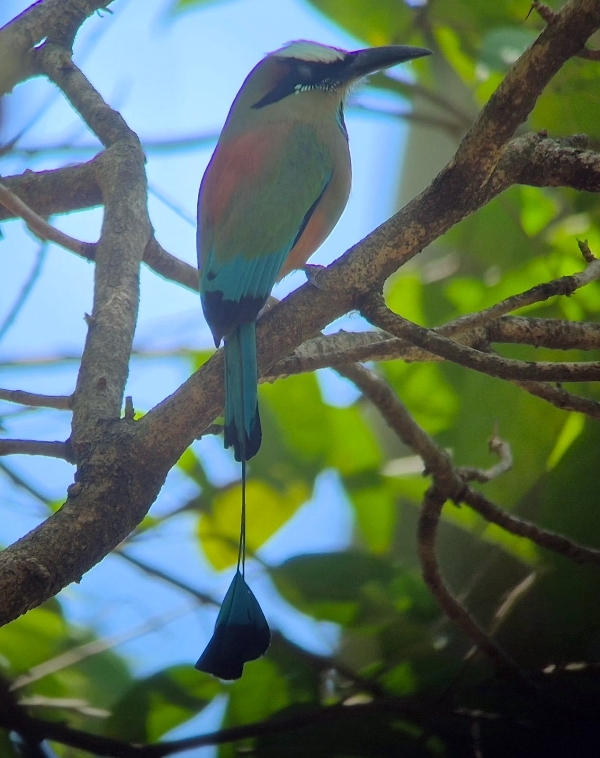
Turquoise-browed Motmot
It was late afternoon when we arrived at the Bougainvillea Hotel, we hadn’t planned an official walk but most of the group went out into the extensive gardens for ther last hour or so of daylight.
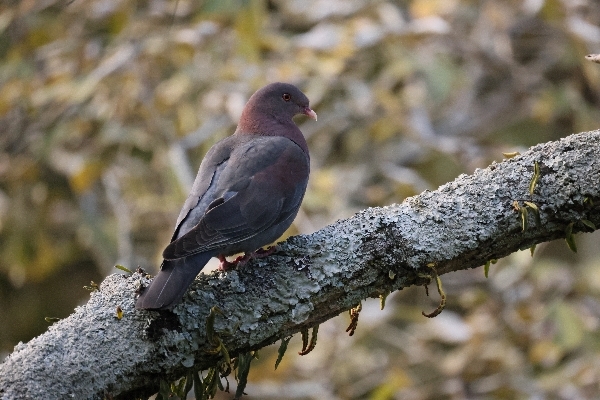
Red-billed Pigeon taken by Kev Jones in the Hotel grounds
Nearly everyone in the group got to see the star of the show, the Mottled Owl! A pair of these elusive owls have been in residence in the gardens, in a huge clump of Bamboo, for the last 4 years.
The Rufous Collared Sparrow went down well, but generally there wasn’t that much activity. A group of Crimson-fronted Parakeets flew over as did a Yellow-headed Caracara. Small flocks of Red-billed Pigeons gathered in the taller trees, a Melodious Blackbird delivered its tuneful song right outside my room.
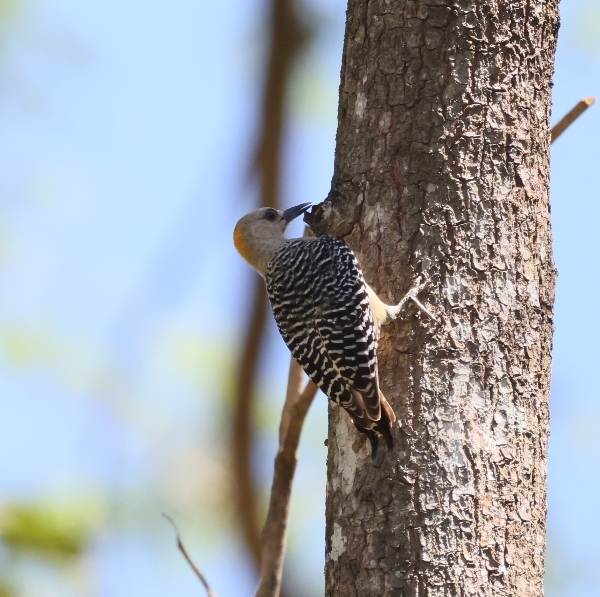
a female Hoffman's Woodpecker taken by Kevin Jones
Our birdlog revealed that we had seen over 60 species today, which wasn't a bad effort in the poor weather conditions,