
PENZANCE TO ST MARY’S FERRY-CROSSING – WALK TO PORTHCRESSA BEACH FOR LUNCH – WALK TO PENINNIS HEAD
WEATHER: high cloud, lots of sunshine. Cloud with light rain on arrival at St Mary’s. Very light wind.
It was a perfect morning for a crossing to the Isles of Scilly, a very light wind and exquisite morning light. We found a few species just before we set sail, Shag, Ruddy Turnstone, Rock Pipit, Magpie, Jackdaw and a few common species of gulls.
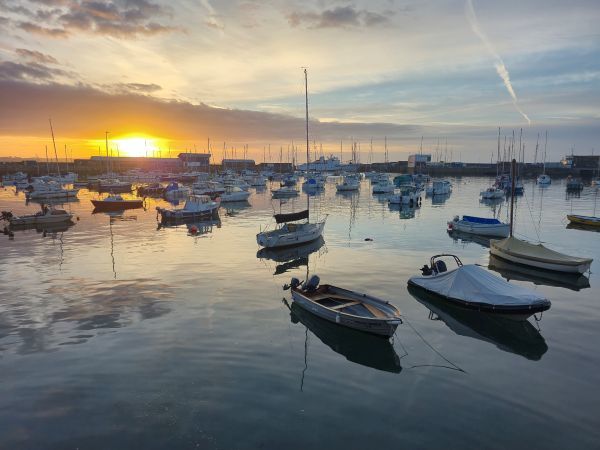
Sunrise at Penzance Marina
As we left the harbour area we added Little Egret, Greater Black-backed Gull, Northern Gannet and then to our great surprise a RED-NECKED GREBE appeared. It just floated past us towards Penzance, an amazing record and a great start to our trip.
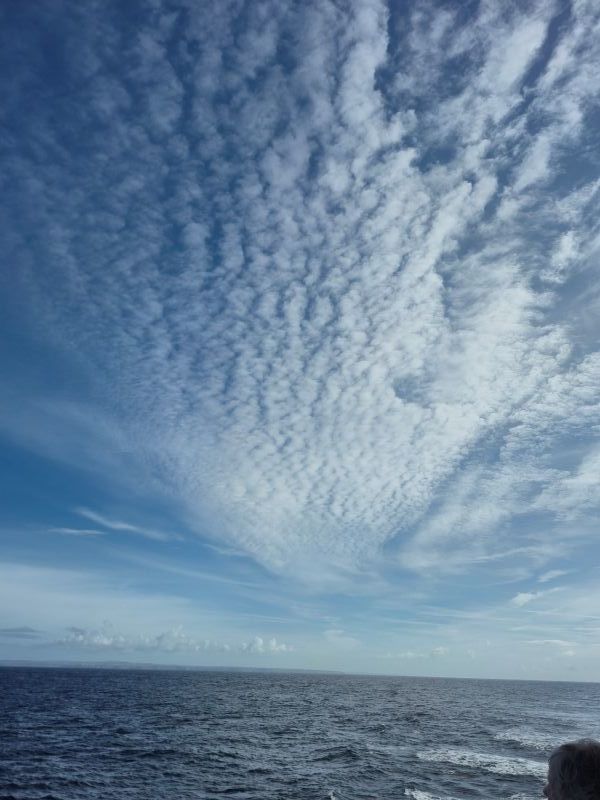
clear sky and a calm sea - perfect for our crossing
Overall, the trip to St Mary’s was disappointing, we did see a nice variety of species but not in any reasonable numbers. We saw a single Grey Phalarope, also singles of Kittiwake, Manx Shearwater, Balearic Shearwater and two Sooty Shearwaters together. Razorbills and Guillemots zipped past us a few times and a nice pod of Common Dolphins came close to the ship.
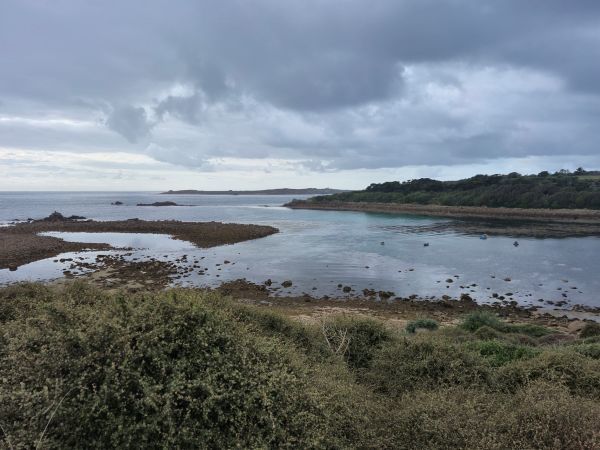
Porthcressa taken from the hill at Buzza Tower
From the quay-side we saw more Ruddy Turnstones and a single Mediterranean Gull. We then walked through Hugh Town and sat down on benches overlooking Porthcressa Beach to eat our lunch. We watched over 30 Med Gulls, 7 Sandwich Terns, a single Grey Heron, a Greenshank and several Oystercatchers.
As we walked up the Hill towards Buzza Tower we scanned the rocks below us and found a bar-tailed Godwit. Further along the track we added Song Thrush, Dunnock, Common Starling, Collared Dove and a Robin.
We reached our accommodation and after a short while we set off to the Peninnis Headland, our luggage had not arrived from the quay yet, so Neville was the only one of us with a telescope. Along the track to Peninnis we added Meadow Pipit, Linnet, Goldfinch, Common Kestrel, Carrion Crow and Blue Tit.
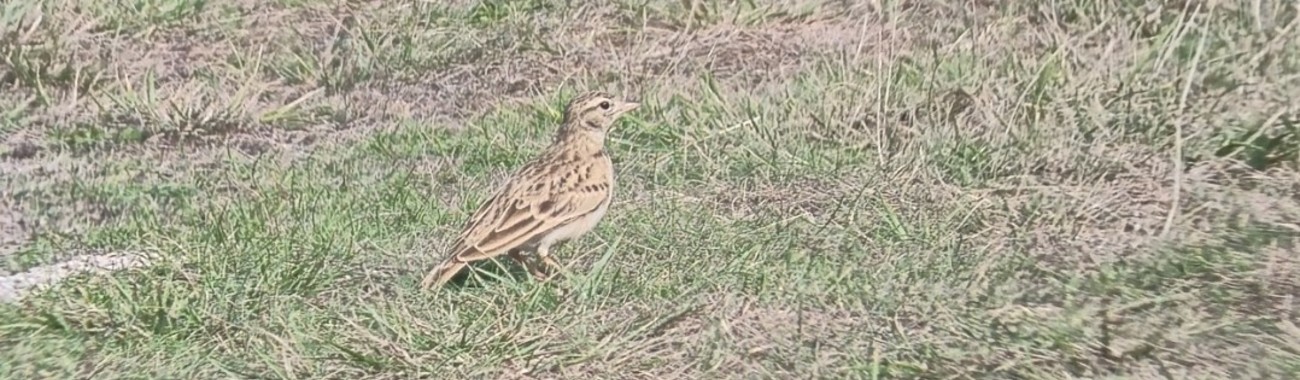
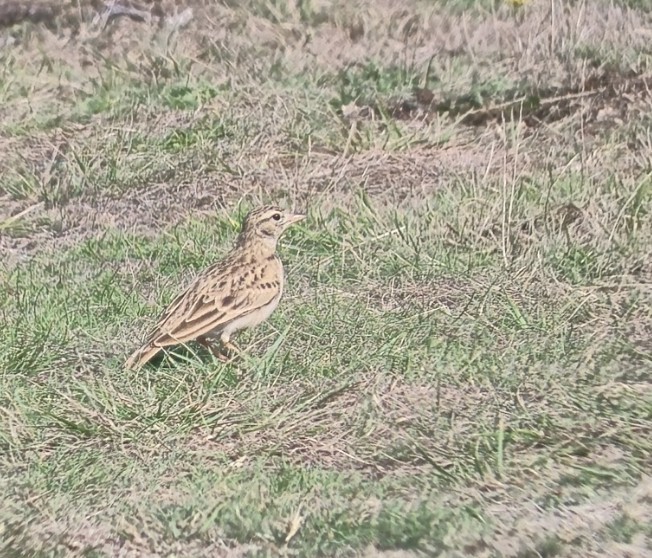
We searched the heathland area around the lighthouse at Peninnis and also the wide grass-covered tracks, we added Stonechat and Northern Wheatear to the list and we saw more Rock Pipits. Our two main target species eventually gave themselves up to us. We found the SHORT-TOED LARK on one of the wide grassy pathways, it dashed about, never stopping for breath.
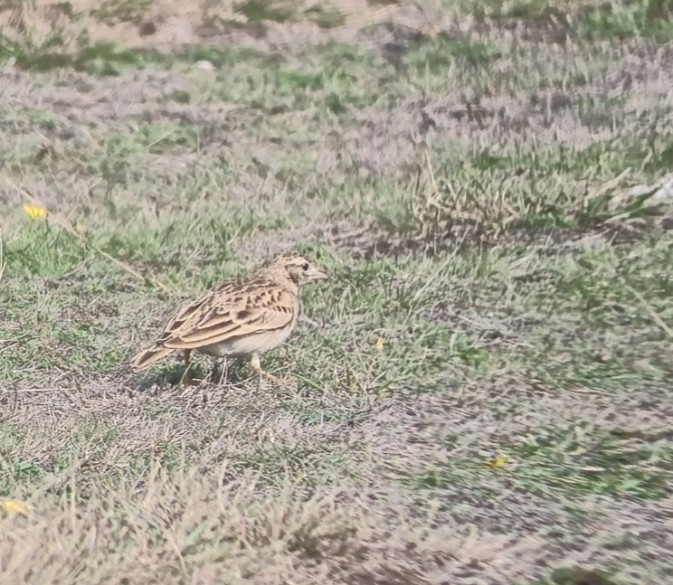
Short-toed Lark
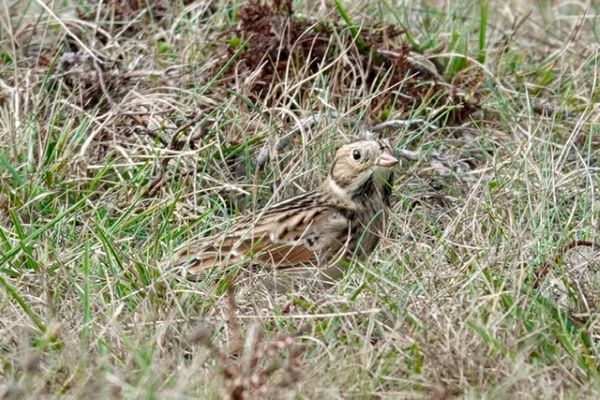
The LAPLAND BUNTING was a little more obliging once we had located it, but we had to be patient to get clear views as the bird crept through the scrub showing only its head most of the time. We did get full body views after a while.
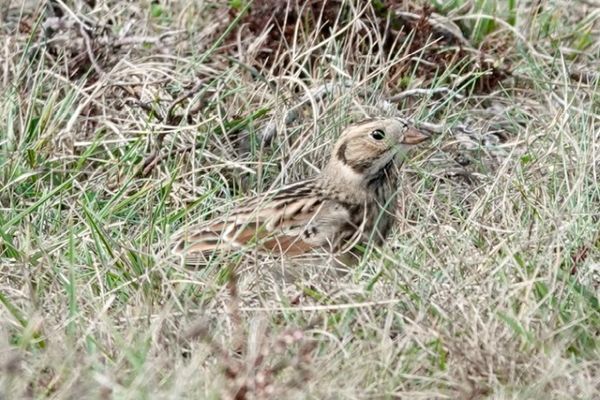
two pictures of the Lapland Bunting taken by Anne Songhurst
It was now approaching 4pm and we had an early dinner booked in town, so we called it a day and walked back to our guest house. We had dinner at 5:30pm in town and by 8pm we had returned to the our accommodation, completed our checklist and returned to our rooms for the night.