
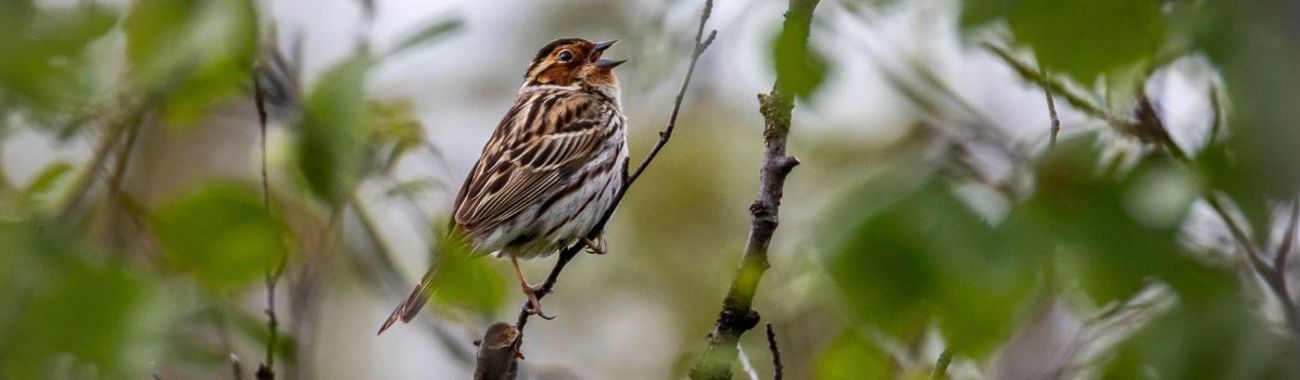
LAST FEW PLACES AVAILABLE On this fabulous arctic tour. We shall visit the famous Varanger Peninsula in the northern most part of Norway. World renowned for its extensive taiga forest, stark tundra and rugged coastline giving you the opportunity to see rare breeding birds, thousands of sea-birds and an impressive array of mammals.
The trip coincides with the 24-hour daylight and the midnight Sun, which will give us plenty of time for birding. As most birds are active during the “night”, we would need to reverse our daily life and be more active in the early hours of the day. Thus, getting up at 3-4 am will be a daily routine, we return for breakfast and for a rest in the hotel before we head out again in the afternoon.
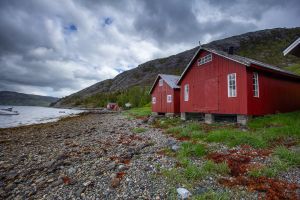
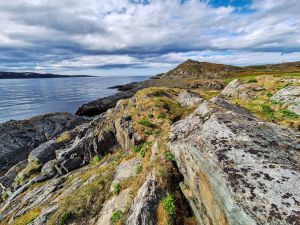
A typical coastal view in the Varanger Peninsular
In addition to the birds, we can also expect to see Reindeer, which graze freely and are used as domestic animals, also Elk, Arctic Fox, Arctic Hare, Humpback Whales, and if lucky, we may even spot a Brown Bear.
Pasvik Valley Forest
We start our journey from Kirkenes airport, which is only about an hour away from our first major birding area: Pasvik Forest. This will be our introduction to spring-birdwatching in Arctic Norway. We will focus on woodland birds and our first target species will include Arctic Warbler, Siberian Jay, Siberian Tit, Pine Grosbeak, Little Bunting and others. We will try to find Pygmy Owl, Common Cranes, Hazel Grouse and if lucky, we may even stumble upon a Capercaillie.
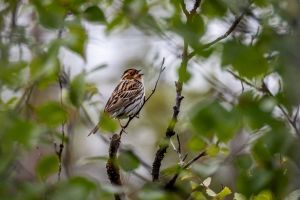
Little Bunting
There are several bird feeders and nest boxes in the area which we will check for nesting Siberian Tits and Goldeneyes. A vast lake right on the border with Russia is a suitable place for many waders, including Broad-billed Sandpiper and Bar-tailed Godwit.
Kongsfjord
After the forest, we head towards the fjords across a picturesque mountainous region. The landscape changes from coastal fjords to mountainous plateaus and offer superb opportunities for landscape photography as well as bird photography.
Views are truly stunning and we will make several stops to look for Hawk Owl, Waxwing and Bluethroat. Once in the mountains we can expect to see Dotterel, Lapland Bunting and Long-tailed Skua. When in the area, we will visit several small harbours and bays and look for King Eider and Steller’s Eider. Often, non-breeding individuals have stayed behind and we will try to see them. Another star bird that we will be looking for is the mighty Gyr Falcon. 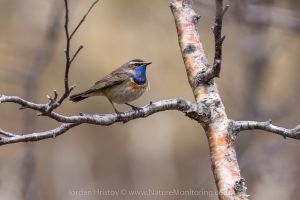 Varanger Peninsula
Varanger Peninsula is one of the hotspots in the whole of Norway and definitely a must-visit place during our spring birdwatching in Arctic Norway.
Bluethroat
The area offers a superb diversity of habitats, including flooded tidal areas, plateaus, cliffs and islands. Here is the famous Hornoya island, which we will try to visit to enjoy the enormous bird colony with over 50,000 breeding seabirds.
Hornoya island
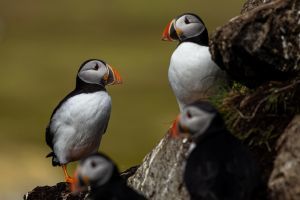
 Atlantic Puffins taken on Hornoya Island
Itinerary
Day 1: Start of the spring birdwatching in Arctic Norway
Arrival day. We will meet at Kirkenes airport to start the trip. After we collect a minivan, we will drive for 40 minutes to arrive at our first birding area for the trip: Pasvik National Park, where we will spend 2 nights.
Day 2: Pasvik Forest
The first part of the trip is in the area of Pasvik National Park. The area is situated on the border with Russia and Finland and is covered with forest and lakes. Here we will aim to see Siberian Jay, Siberian Tit, Pine Grosbeak, Little Bunting, and Arctic Warbler. The latter often sings around the grounds of our lodge and some of the other target birds come to its feeders. The lakes in the area are occupied by breeding Red-throated Divers, Common Scoter, Smew, and many more. Some of the waders we expect to see are Spotted Redshank, Ruff, Bar-tailed Godwit, Broad-billed Sandpiper, Terek Sandpiper, and many more. If lucky, we can even stumble upon a Hazel Grouse, a Capercaillie or a Brown Bear.
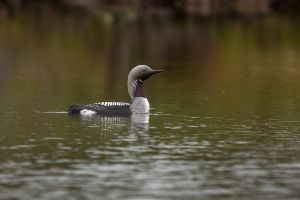
Red-throated Diver
 Day 3: From forests to Fjords
After another morning session in the forest of Pasvik, we head to the fjords. It will take us about 4 hours to drive to Kongsfjord, where we will spend the next 2 nights.
On the way, we will make several stops to look for Lapland Bunting, Dotterel, Long-tail Skua and Hawk Owl. Back along the shore we will do several stops given the time available. We will look for Bar-tailed Godwit in full summer plumage, Red Knot, Eider Ducks, Greater Black backed Gull, Red-necked Phalaropes, Red-throated Pipit, Bluethroat and many more.
Waxwing

Some of the lakes along this route often have breeding Red-throated Divers or White-billed Divers which may stay for the summer after spoending the winter here.
The bays on the sea are suitable for King Eiders and Steller’s Eiders, so we will be looking for those.
We will arrive in the Kongsfjord Arctic Lodge Hotel which will use for our base to explore the area on the following day.
Day 4: Fjords and mountain plateaus
Today, we will explore the area of Kongsfjord, the neighbouring Batsfjord, and the mountain plateaus in between. We will be looking for Gyr Falcon, Dotterel, Lapland Bunting and Ruff in their full summer plumage. Also Rock Ptarmigan. Long-tailed skua patrol the plateaus, and in the bays we should be able to find King Eider and Steller’s Eiders.
 Day 5: Coastal birding
Today we head to Vardo, which is a superb site and an excellent base. We will spend 3 nights in the area as there is so much to see.
Dotterel
On the way, we shall stop at several places along the coast and the mountains to look for Red-necked Phalarope, Red-throated Pipit, Hawk Owl, Waxwings and we might be surprised by finding a Glaucous or Iceland Gull.
Day 6: Bird Island
Today will be rather exciting as we will visit the bird island of Hornoya. However, there is currently a major debate on public access to the island, so we may not be allowed, but will still be able to see the target species. The main birds here are Common, Black and Brunnich’s Guillemot, Razorbill, Puffin, Red-throated Pipit, Twite, Eider Duck, Shag, Barnacle Geese and many more. Often Gyr Falcon hunts here and we might be lucky to see it.

In the last few years, there has been an adult Ross’s Gull that spends the summer here, so we might be lucky to see it.
The grassland in the area is suitable for Shore Larks. Arctic Foxes and Arctic Hares often patrol the area.
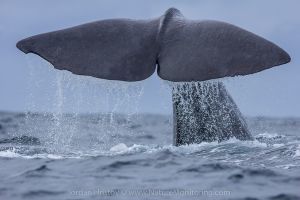
The coastal waters are fantastic for watching sea mammals as well as birds so whale safaris are an option but not included in the price offer. We can fit in a Whale Safari when at Vardo, depending upon the desire of the group and the weather conditions. Some of the whales that can be seen are Humpback whales, Fin Whales, Minke Whales and Harbour Porpoise which are often seen from the shore.
 Day 7: mountains and fjords
The day will be devoted to the mountains and fjords at the Varanger Peninsula. We will drive inland to look for Lapland Bunting, Arctic Redpoll, Dotterel, Snow Bunting, Shore Lark, Short-eared Owl, and Ptarmigan.
Day 8: back to Kirkenes
Today we may need to start early to head to Kirkeness for our flights home. If very early, we might need to drive on the previous day.