
DRURIDGE POOLS NATURE RESERVE – LONG NANNY NT TERN COLONY
WEATHER: all day sunshine with a very welcomed cool sea breeze. Top temp 25C
This was a bit of a twitching day, with several uncommon species in the area we had to go and look for a few of them. We stuck to coastal birding as the temperature inland was likely to be hot as the whole of the UK was sweltering under a hot, flaming June, sun.
We set off at 8am and drove south to Druridge Pools, it was a 45 minute drive and the traffic was light. There are several hides around the pools at Druridge, especially Budge Fields which we were particularly interested in. After parking the bus we walked through scrub and woodland to the first of three hides.
Immediately we found our first target species, you couldn’t miss them really, six Eurasian Spoonbills sat high in the trees on the far side of the lake in a Herony. A few Herons were also with them, they were far off but they got up and flew towards us, landing out of sight near a large Gull roost.
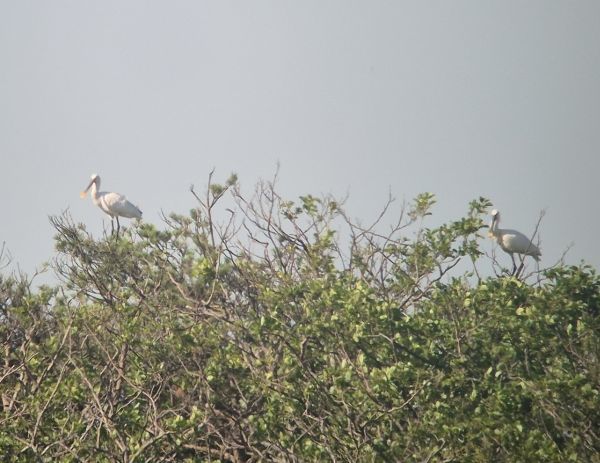
our first view of the Spoonbills
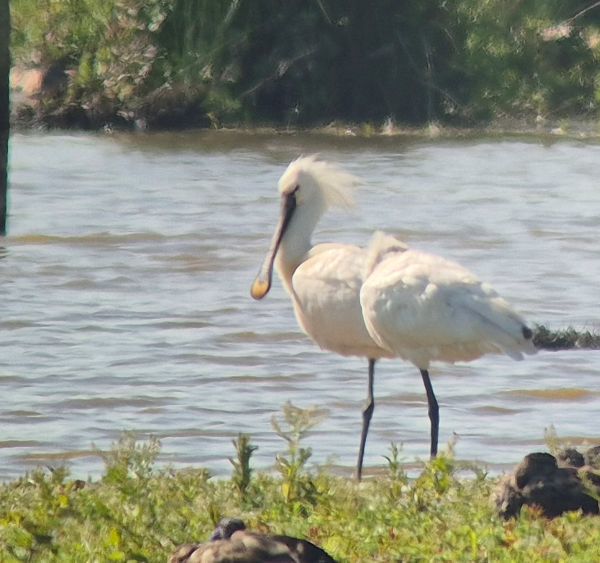
the Spoonbills flew down from the trees and began roosting on the islands in the main pool.
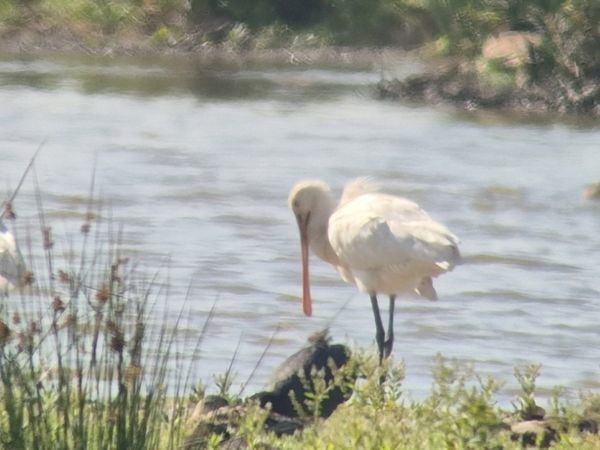
this juvenile bird was with the group of six Spoonbills
From the hide we notched up a good list of ducks: Mallard, Gadwall, Teal, Wigeon, Shoveler, Shelduck and lots of Canada and Greylag Geese. Little Grebe, Lapwing, Coots and Moorhens all had chicks in tow. We searched the muddy margins of the pool and the grassy island for a couple of WOOD SANDPIPERS, but we failed to see them.
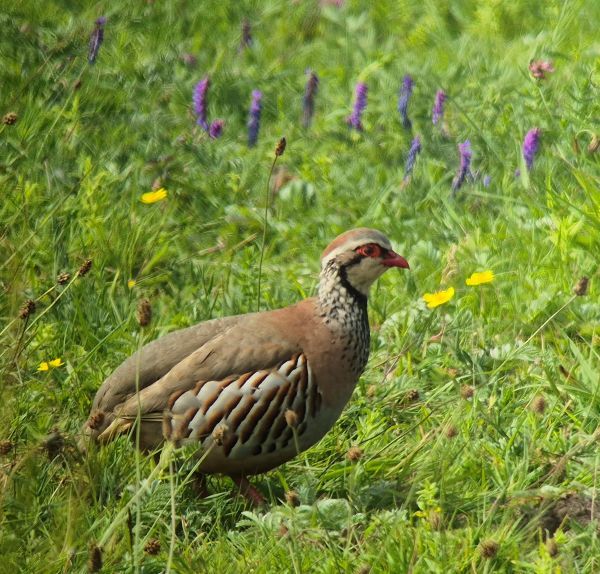
our first Red-legged Partridges walked in front of the hide, two of them
Other waders seen were: Avocet, Common Snipe and a few Redshank. The walk between the hides gave us views of a few passerine species: Sedge Warblers were giving us their display song-flight, as were meadow Pipits, we saw Reed Buntings, Blackcaps and we heard Willow Warblers and Chiffchaffs.
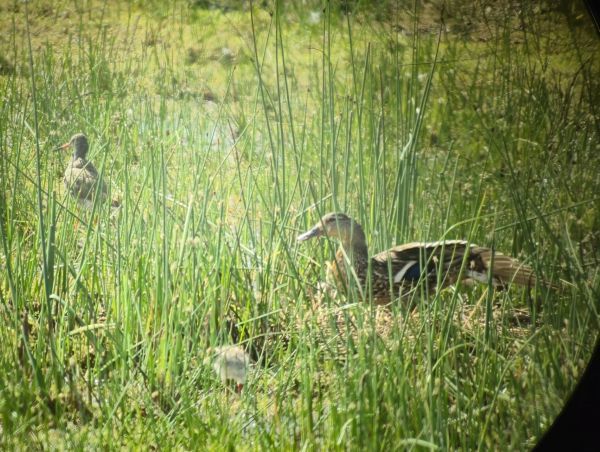
there is a Redshank chick next to a sitting Mallard with mother Redshank in the background, we saw 3 chicks altogether here.
From the main hide we searched again for the Sandpiper but found only Ringed Plover and we had better views of the Spoonbills, but they were all asleep out on the mud.
The third hide we visited required a short journey in the bus along the road in the direction we had arrived in. From this hide we were more optimistic in seeing the Wood Sandpiper, but we were disappointed. We saw Redshank (with Chicks), Common Snipe again and we enjoyed watching all the water birds and ducks. We picked out a couple of Mediterranean Gulls in the gull roost, also LBB and GBB Gulls, Black-headed and Herring Gulls.
Around 11:30am we decided to take a coffee break and drove into Cresswell passing the pools there and turning into the car park at the ‘Drift Café’. Coffee and cake was on the menu for most of the group , we spent an hour there before returning to Druridge to continue our Sandpiper search. As soon as we returned to the last hide we had visited we found the Wood Sandpiper, it was on one of the islands and was quite difficult to see. Eventually we got everyone to see it through the scopes, whoopie!! I said to the group that it pays to return for a second look as it had done so on Holy Island when we found the Black Guillemot.
Next we drove to Long Nanny, the National Trust Tern Reserve near Beadnell, we parked in the recommended car park at Newton Steads and set off on foot for the 1km walk through the sand dunes. Along the way we saw Linnets, Goldfinches, Skylarks and Meadow Pipits.
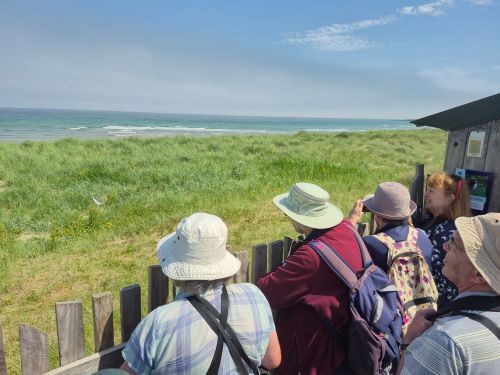
watching the Arctic Tern Colony at Long Nanny
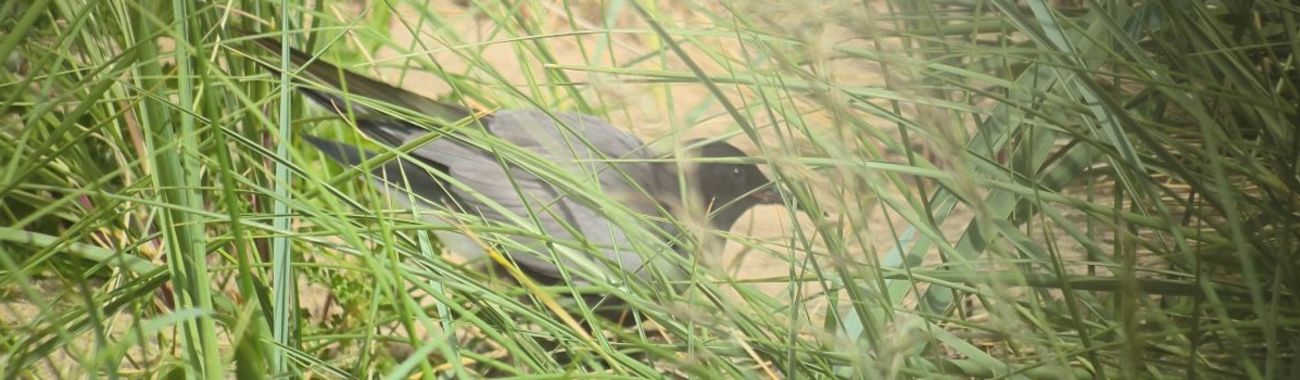
At the Ranger’s Hut we stood either side, Mike and Lorna went to the RH Side and saw our target bird in flight, the AMERICAN BLACK TERN!! The bird flew off before anyone else got to see it!
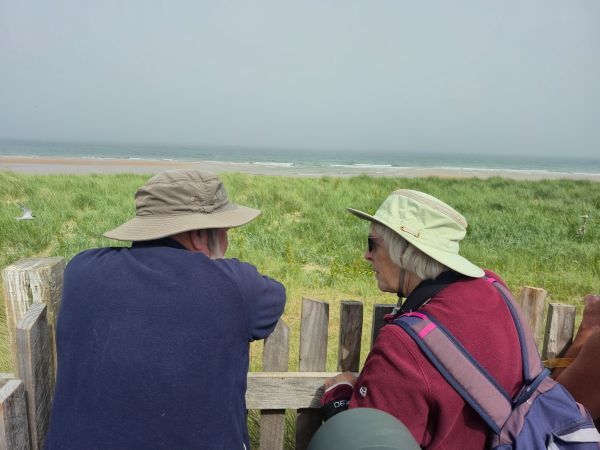
the Taylors - they saw the Black tern as soon as we got there and the rest of us had to wait.
The Warden in attendance told us a lot about this transatlantic visitor which was here for its seventh year. This year the American Black Tern had mated with a male Arctic Tern and they had produced two eggs!! One hatched six days ago, but unfortunately the chick died. The second egg is now being incubated by the mixed pair, but the warden thinks that the egg is none viable because it should have hatched five days ago with the other egg. So, the warden is going to remove the egg tonight!
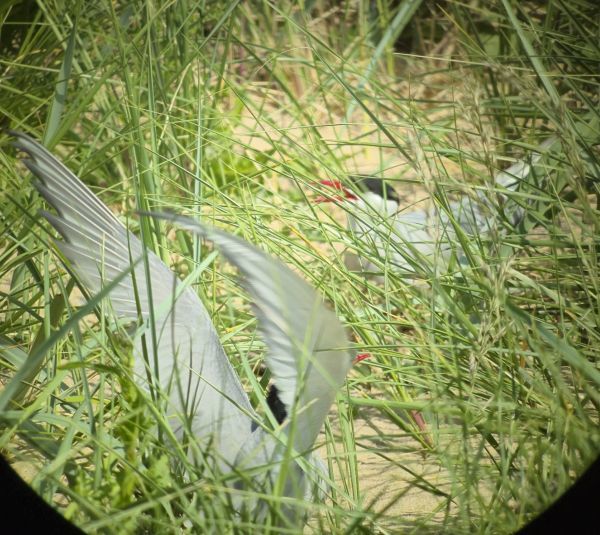
the Arctic Tern in the background is the male partner of the Black Tern, he is taking his turn incubating the remaing egg
We decided to wait for the bird to return which could be anytime between 30 minutes and 3 hours! We had a great time watching the colony of Arctic Terns returning to feed their chicks, dozens of them. We could also see a very large colony of Little Terns on a shingle bank a couple of hundred meters away. Ringed Plovers were also feeding young near the Arctic Terns.
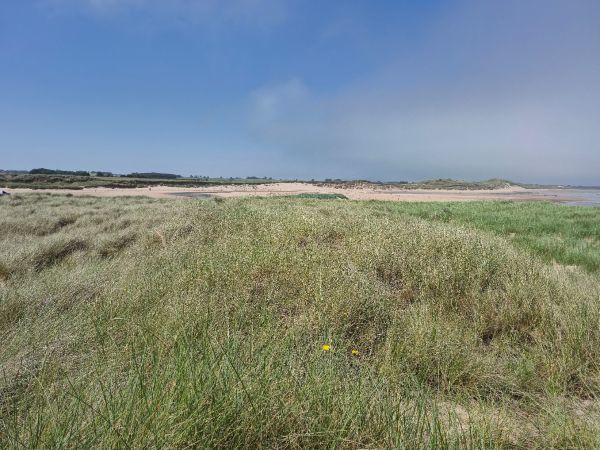
the sandy area was where a large Little Tern colony was in full swing, a couple of time they all flew up together, spooked by a large gull and once by a power-glider
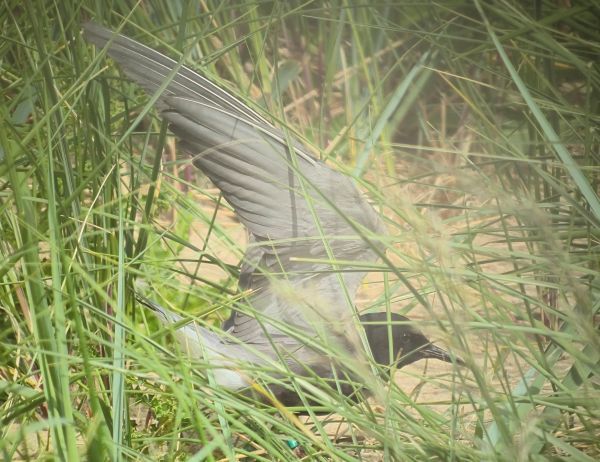
After 40 minutes Pete and Christine gave up and set off back to the bus. We waited 45 minutes, and just as we said that another fifteen minutes would be our limit, the bird returned to the nest that it shared with a male Arctic Tern, we all had excellent views of it as it settled down on the remaining egg. Thank god for that!
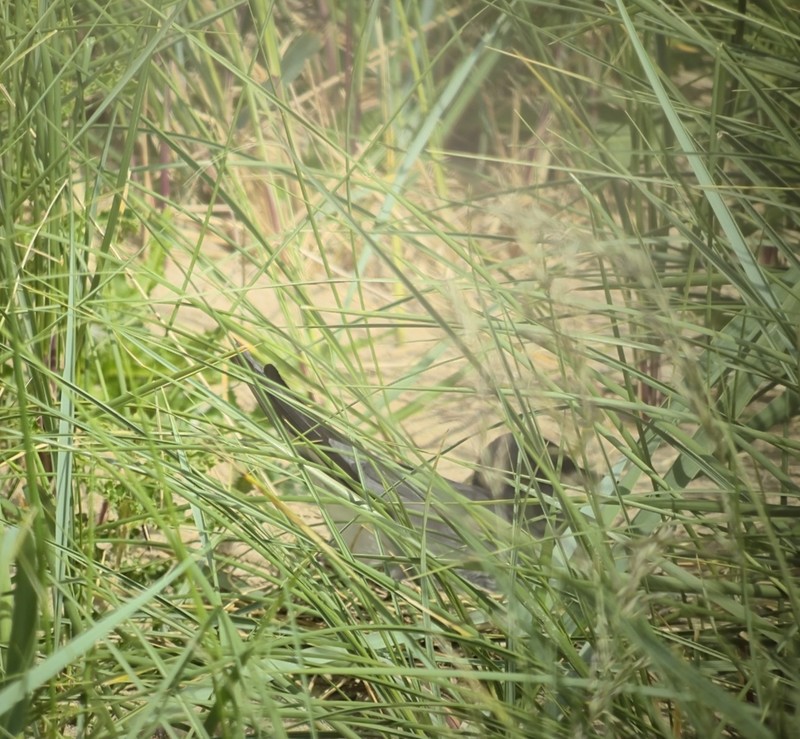
record shot of the Black Tern
Walking back into a strong cold wind was a struggle, we saw a few butterflies on the way out which included Common Blue, Painted Lady, Meadow Brown, Red Admiral and we saw another Drinker Moth caterpillar but very few sightings were made on the way back.
It was 4:30pm when we got back to the car, we were all tired but happy that the bird had ‘terned up’ a lifer for all my group, except for Peter and Christine who missed it.
We were back at the hotel just after 5pm, we met up at 7pm for our last dinner together, we had a lot of laughs at the table. Our birding total was 110 species, we saw everything we had hoped to see and I can’t wait to be back here again next year, what a wonderful place.