
RIA FORMOSA NATURAL PARK AT: QUINTO DE MARIM, THE LUDO TRAIL AND SAN LORENZO GOLF COURSE
WEATHER: all day sunshine, moderate breeze, top temp 21C
We had great weather and great birding today and we walked a fair old way too! Our early morning pre-breakfast excursion produced nothing new but we enjoyed being out there. I took my group to the nearby salt pans and a few kilometers down the main road towards Faro to look for the Black-winged Kite that I had seen the last evening, it didn’t turn up.
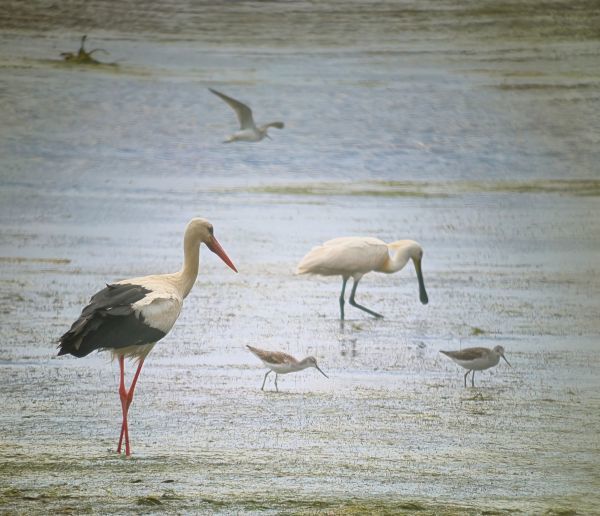
Out on the Marshes at Quinto da Marim - Greenshanks with a White Stork and a Eurasian Spoonbill
The rest of the day was spent visiting the Ria Formosa natural park, we ventured along the tracks at two separate parts of the reserve. The first was the section at Quinto da Marim which is a well-managed reserves with woodland walks, open marshes, lagoons and some dis-used salt pans with a section of shore-line too. We saw a lot of birds during our visit although the woodland areas did not produced that much. Golden Orioles called and dashed away, we got glimpses of them, it is strange for us to see them living in pine woods but that is where they were. We saw plenty of Magpies of both species, a Jay, Sardinian Warblers, hundreds of Collared Doves, and we found a few Crested Tits.
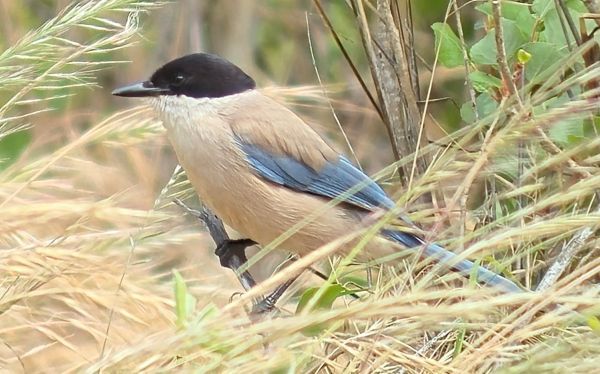
we got good close-up views of the lovely Iberian Magpie
This part of the reserve is famous for the resurrection of the population of Audouin’s Gulls which is now over 7000 pairs, we saw quite a few of them on the marsh and some dropped into a fresh-water pool when we visited a hide. Out on the marsh we saw a few Greenshanks, with Dunlin, Sanderling, Eurasian Spoonbills, White Storks, Greater Flamingos, Little Egrets, and a few gulls.
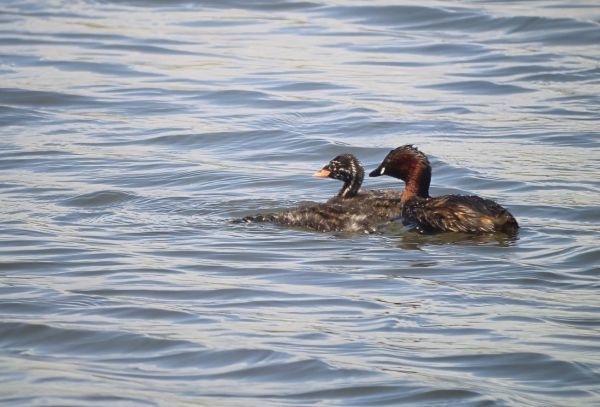
Little Grebe with chicks
From the hide we enjoyed watching the antics of the chicks in the Egrets Colony, many Cattle Egrets breed there with a fewer number of little Egrets and just a few pairs of Spoonbills. Little Grebes chased around on the water with Common Pochard, Gadwall, Moorhen and Coots also present.
We added a few more species to the list down by the shore, it was quite windy there so we didn’t linger. Oystercatchers, Cormorants, Turnstones and a few more gulls was all we saw.
By the time we returned to the car park it was almost lunchtime so we opened our bags and devoured our picnic supplies, Iberian Magpies were happy to share some scraps and came very close to eat them.
For the afternoon we drove to Faro Airport and took the coastal road to the end of the runway, a large open expanse of marshes and inlets confronts, it was beautifully clear, the light was superb, it was just a little too windy for my liking. We parked the bus and began an epic walk along the Ludo Trail which leads you for 3 or 4 kilometers to a hide.
We took our time and completed the walk at a very gentle pace enjoying some great sightings and a lot of new waders went onto the list, every few minutes an airliner would take off from Faro Airport and drowned our conversation in jet-engine noise.
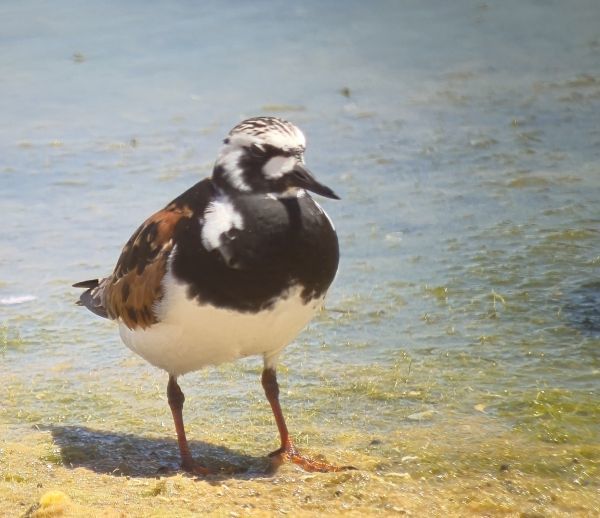
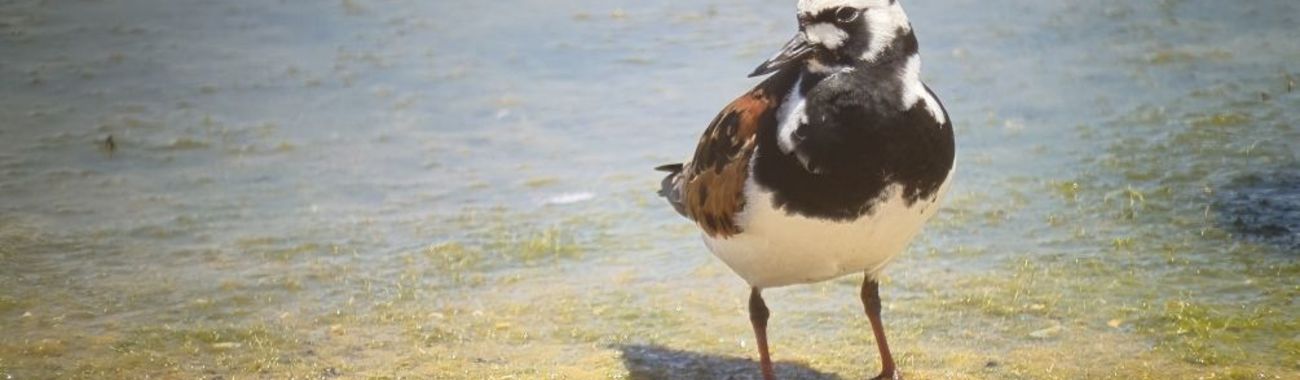
Ruddy Turnstone in full summer plumage
We enjoyed good close views of a lot of species, mainly Dunlin, Sanderling, Turnstones, a single Curlew Sandpiper, Kentish Plover and Ringed Plovers. Whimbrel, Grey Plover and bar-tailed Godwits were a further away and Little Terns entertained us the whole time. On the fresh-marsh many Flamingos were joined by Spoonbills, White Storks, Little Egrets, Grey Herons and a huge flock of Audouin’s Gulls, Glossy Ibis flew over and a distant Short-toed Eagle was spotted by birding Guru, Guy.
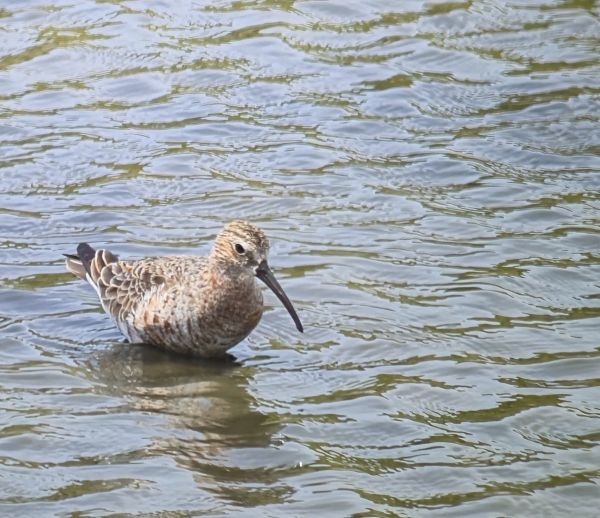
our one and only Curlew Sandpiper
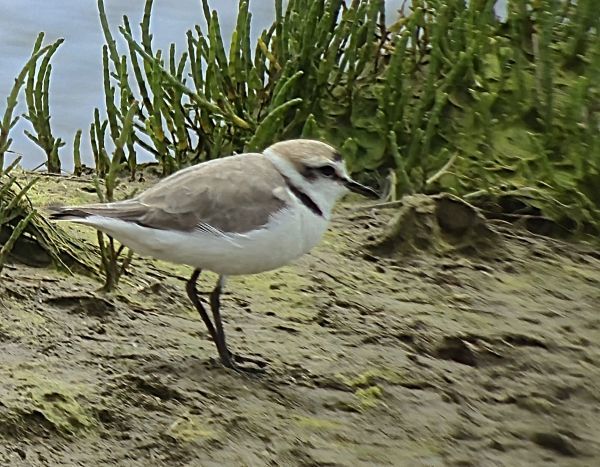
male Kentish Plover
At the San Lorenzo Golf Course we scanned the pools for more species and had great views of at least, four Little Bitterns! A couple of pairs were chasing one another around. The Black-headed Weaver is also present here, an introduced or escapee species breeds in small colonies in the reeds. We saw them building nests for the new season. We heard Reed Warbler and Cetti’s Warblers, we watched Great Crested and Little Grebes, lots of Common Pochard, Gadwall, Mallards, Coots and moorhens but we couldn’t find a single Purple Swamphen?
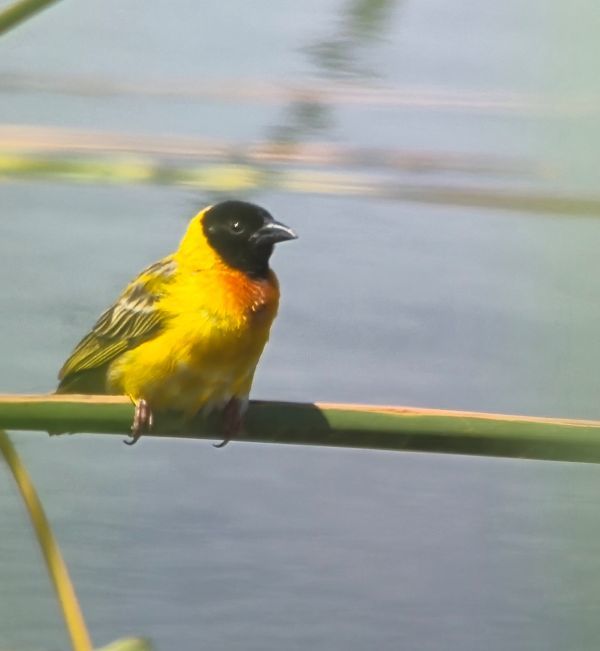
the invasive escapee, Black-headed weaver is breeding at San Lorenzo Golf Course
Walking down past the golf-course we heard a Wryneck calling and after following it around the pines trees it eventually settled and gave us great views in our scopes.
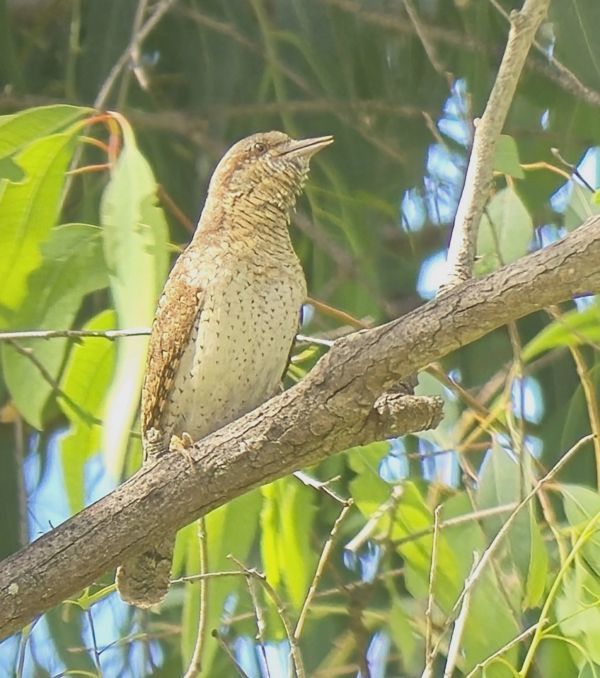
Eurasian Wryneck
We were all tired by now having walked several kilometers, so I took a taxi back to the bus and drove back for my group. We arrived back at the hotel around 6:30pm, it had been a long day but very enjoyable.